

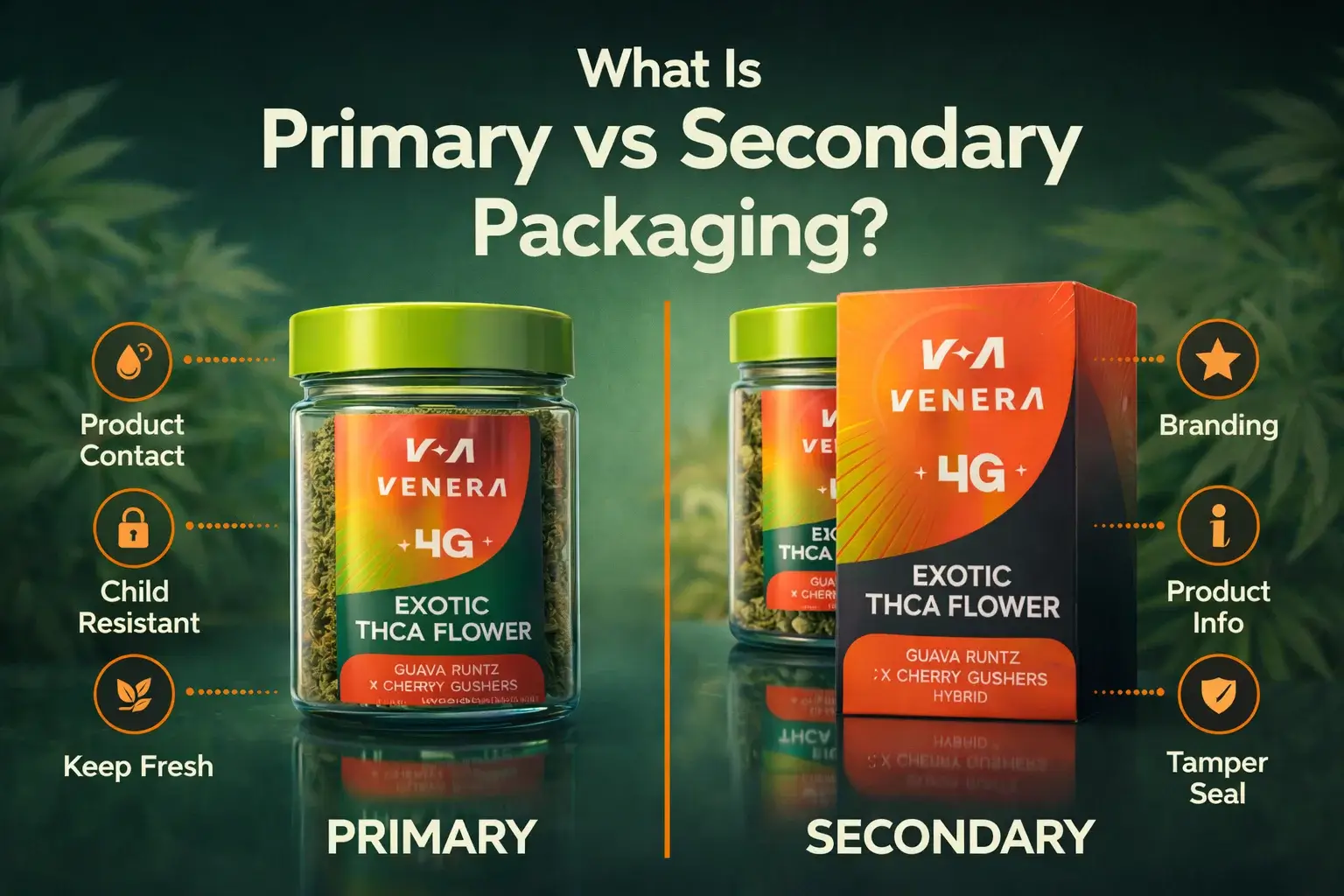
What Is Primary vs Secondary Packaging?
Packaging sounds simple. Take a product, pack it in a box, and send it. However, packaging is not actually single-layered. Each layer has a job.
Primary packaging and secondary packaging are the most discussed ones. Different purposes use them. They are resolving various issues. Being deceived leads them to make wrong choices.
The distinction is described in this article in simple terms. And why secondary packaging is as important as many people believe.
What Is Primary Packaging?
The first layer is primary packaging. It touches the product. This is what will remain, should you take away all the rest:
- A shampoo bottle made out of plastic.
- One tablet in a blister pack.
- A glass jar for cream
- A pouch sealed around food
Primary packaging prevents air loss. It keeps moisture out. It eliminates leakage, contamination, or damage.
Most products cannot exist without primary packaging. However, when that work is completed, it largely ceases to play any role.
What Is Secondary Packaging?
The secondary packaging encircles the primary packaging. It does not come into contact with the product itself. But it still matters:
- A bottle in a cardboard box.
- A carton that contains several pouches.
- A branded sleeve around a jar
- A box containing blister packs that are retail.
The product is grouped in secondary packaging. It safeguards them when handling, and it describes what the product is like.
This is where individuals really look first. And it works much more than people think.
The Difference between Cores, Defined in Layman’s Terms
The purest method of thinking about it is as follows:
- The product is safeguarded by primary packaging.
- The product is safeguarded, packaged, and labeled by the secondary packaging.
Primary packaging is practical in nature. Secondary packaging is functional.
The Importance of Secondary Packaging
Secondary packaging is usually a consideration in many teams. That’s a mistake. Secondary packaging catches nearly all the components of the supply chain.
It is safe during transportation
Products don’t move gently. They’re stacked, shaken, and dropped. That abuse is taken up in secondary packaging.
A good box prevents:
- Crushed bottles
- Torn labels
- Leaking caps
Without it, returns go up fast.
It allows effective logistics
Warehouses are not dealing with individual bottles. They handle units. The concept of secondary packaging implies:
- How many items fit in a case
- How cases stack on pallets
- How space is used in trucks
Poor secondary packaging is time-wasting. Economical secondary packaging is economical. This is the place where cost control actually takes place.
It conveys information
The majority of the legal and practical information is stored in the secondary packaging. This includes:
- Product name and variant
- Instructions
- Ingredients or materials
- Warnings
- Barcodes
The main packaging does not always include sufficient space. That is solved through secondary packaging. In case there is a lack of information, the product stagnates at retail.
It shapes first impressions
Individuals hardly encounter primary packaging. They see the box. Secondary packaging is what:
- Sits on the shelf
- Appears in product photos
- Unboxed in unboxing videos.
It creates pre-hand expectations of the product even before touching it. The plain box has a cheap feel. That perception sticks.
Secondary Packaging and Tertiary Packaging
One more layer is worth mentioning, not to be confused. Tertiary packaging is bulk handling:
- Shipping cartons
- Pallets
- Stretch wrap
This layer does not reach the consumer.
The bridge is secondary packaging. It links the product with logistics as well as retail. This is why it has that much responsibility with it.
Types of Secondary Packaging
There is no such thing as secondary packaging. It comes in many forms. Here are the most common ones.
Folding cartons
Very lightweight cardboard boxes for cosmetics, supplements, food, and electronics. They’re easy to print and cheap at scale.
Rigid boxes
Thicker. Heavier. More expensive.
Rigid boxes are used for:
- Premium products
- Gift items
- Electronics
They provide security and value addition.
Sleeves and wraps
Low secondary packaging. A sleeve is slipped over the main pack. A wrap groups items together.
Sleeves and wraps are used when:
- Space is limited
- Sustainability is a concern
The main packaging is already presentable.
Multipacks
A secondary package that contains several units. Common in:
- Food and beverage
- Household goods
- Promotions
They make the process of making decisions and logistics easier to buy.
The Interaction between Primary and Secondary Packaging
These two layers are not competitors. They’re partners.
A well-designed system does the following three things:
- The first packaging is that of the product itself.
- The primary packaging is covered by the secondary one.
- They both assist with the storage, shipping, and display.
In case one of the layers is weak, the other is affected. Powerful primary packaging and weak secondary packaging result in damage. Even a good secondary packaging is not able to mend a leaky bottle. Balance matters.
Cost Disagreements You ought to be familiar with.
Primary packaging is normally more expensive per unit. It uses more material and needs a more stringent examination.
Secondary packaging is cheaper on a unit basis. But it influences costs at scale.
A small design change can:
- Reduce shipping volume
- Increase pallet efficiency
- Lower damage rates
That is why operations teams are very much concerned about secondary packaging.
Sustainability and Secondary Packaging
This is the place where the majority of change is occurring.
Brands are reducing:
- Excess layers
- Empty space
- Plastic components
The first is usually secondary packaging.
Common changes include replacing cardboard with recycled cardboard, removing inner trays, and using mono-material designs.
The challenge is balance. Take away excess, and merchandise collapses. Go overboard, and production will be wasted.
Both are solved by good secondary packaging.
When Secondary Packaging Takes the Center Stage
Secondary packaging takes the greatest part of the work in some products. Think about:
- Subscription boxes
- Gift products
- E-commerce orders
- The box is the experience.
In these cases, there is minimal primary packaging. Branding, structure, and protection are in secondary packaging. That is why this is the first place where many modern brands invest.