
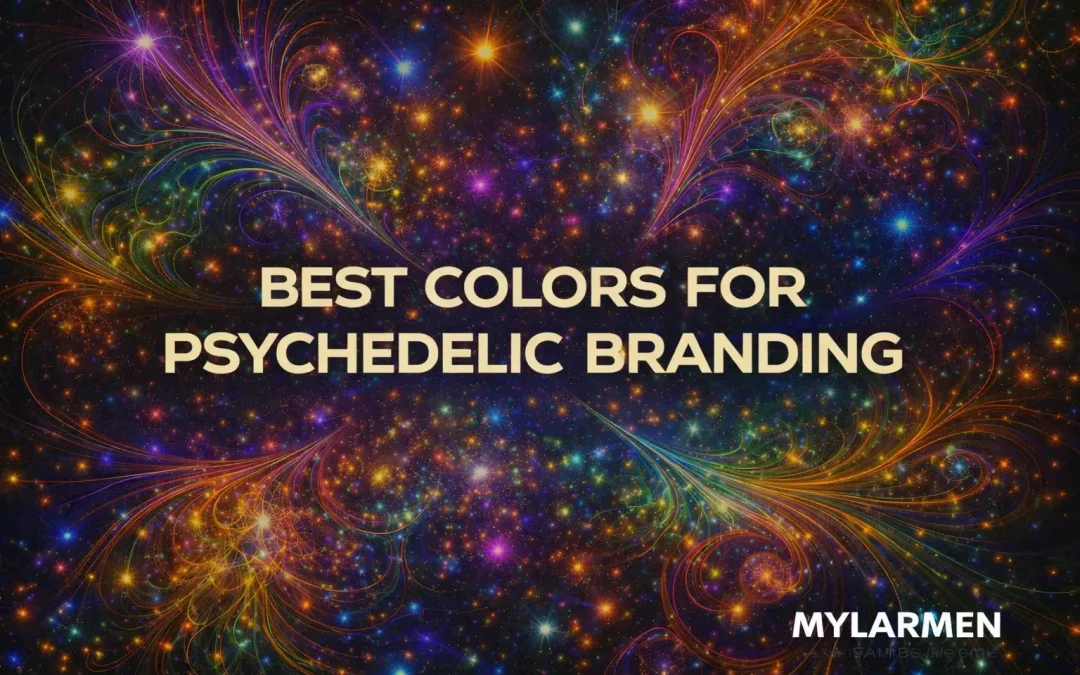
Color matters more in psychedelic branding than in most other styles. It sets the mood before a word is read. It signals whether a brand feels safe, intense, playful, spiritual, or chaotic. And it shapes how people feel, not just what they think.
Psychedelic branding is about perception. Expansion. Altered states. Curiosity. And sometimes discomfort. The right color choices support that experience. The wrong ones break it.
Let’s talk about which colors work best, why they work, and how to use them without turning your brand into noise.
What “psychedelic” actually means in branding
Psychedelic branding usually aims to:
- evoke altered perception
- suggest depth or inner exploration
- feel fluid rather than rigid
- break linear or “corporate” visuals
- create emotional response first, logic second
The key to the perfect psychedelic design is contrast, layering, and unexpected combinations.
Color choices should feel intentional. Just like purple and violet. They both have depth and inner space. What’s more, purple is one of the most common colors in psychedelic branding. And for good reason.
It’s associated with:
- altered consciousness
- spirituality and mysticism
- creativity and imagination
- the space between logic and emotion
Violet shades work especially well when the brand wants to feel introspective rather than loud. Think cosmic visuals, abstract forms, slow movement, and depth.
How to use it well:
- pair deep purple with black or very dark blue
- add subtle gradients instead of flat fills
- use lighter lavender tones for accents, not the base
Avoid overusing bright purple everywhere. It can quickly feel artificial or dated if pushed too hard.
Blue and cyan: calm, trust, and expansion
Blue might not seem psychedelic at first. But it’s one of the most useful colors in this space.
It signals:
- calm and safety
- trust and openness
- mental clarity
- expansiveness
Light blue, cyan, and teal tones often feel like breath or space. They work well for brands that want to balance intensity with grounding.
This is especially important for projects related to mental health, wellness, or education around altered states.
How to use it well:
- combine blue with warmer accent colors
- use gradients that shift from blue to green or purple
- keep saturation controlled
Too much cold blue can feel corporate. The trick is softness and motion.
Neon green: energy and the unfamiliar
Neon green is risky. But when used carefully, it can be powerful.
It often signals:
- something unnatural or otherworldly
- energy and movement
- curiosity and disruption
Green also connects to nature and growth. Neon green sits between natural and synthetic, which fits psychedelic themes well.
Best use cases:
- accents, highlights, buttons, or symbols
- typography details
- contrast against dark backgrounds
Avoid using neon green as the main background. It overwhelms fast and causes visual fatigue.
Pink and magenta: emotion and play
Pink in psychedelic branding is not soft or romantic. It’s emotional. Bold. Sometimes aggressive.
Magenta and hot pink can suggest:
- heightened emotion
- pleasure and sensation
- playfulness mixed with intensity
These tones work well when a brand leans toward art, culture, music, or youth-driven spaces.
How to use it well:
- pair with dark neutrals like black or charcoal
- mix with purple or orange for depth
- use it in shapes or typography, not everywhere
Flat, pastel pink usually doesn’t work here. Psychedelic pink needs contrast.
Orange and red: heat and movement
Red and orange bring heat. They add urgency and physical energy.
They are useful for:
- creating tension
- signaling intensity or power
- breaking calm compositions
But they’re easy to misuse.
In psychedelic branding, these colors work best as accents or secondary layers. Too much red can feel aggressive or unsafe. Too much orange can feel cheap.
Good approaches:
- burnt orange instead of bright orange
- deep red paired with purple or dark blue
- gradient transitions rather than solid fills
These colors work best when they feel like motion, not blocks.
Black: grounding and contrast
Black is often overlooked in psychedelic palettes. But it’s essential.
It provides:
- grounding
- contrast
- visual rest
- seriousness
Without dark anchors, psychedelic colors lose impact. Everything becomes flat and noisy.
Black backgrounds allow bright or complex visuals to breathe. They also add a sense of depth and mystery.
How to use it well:
- use black or near-black as a base
- layer colors on top with transparency
- avoid pure white unless needed for text
Many strong psychedelic brands are mostly dark, not bright.
Gradient-based color systems
One solid color rarely carries a psychedelic brand. Gradients do.
Gradients suggest:
- movement
- transformation
- fluid states
- non-linear experience
They also allow brands to shift tone without changing identity.
Effective psychedelic gradients often:
- move between warm and cool tones
- include at least three colors
- avoid harsh transitions
Examples that work well:
- purple → blue → teal
- orange → pink → violet
- green → yellow → cyan
The key is softness. Hard gradient edges break the effect.
Muted and earthy tones (yes, they work)
Not all psychedelic branding is loud.
Earthy colors like:
- deep brown
- moss green
- sand
- muted gold
Can feel grounded and ancient. They connect altered states with tradition, ritual, and nature.
This works especially well for brands that:
- focus on mindfulness or integration
- reference indigenous or ancestral knowledge
- want to avoid a “party” aesthetic
Earth tones become psychedelic when paired with unusual layouts, symbols, or subtle color shifts.
Color combinations that usually work
Some combinations show up again and again because they feel right.
A few reliable ones:
- deep purple + neon green
- black + cyan + magenta
- dark blue + orange accents
- violet + pink + soft yellow
- charcoal + teal + acid green
These combinations balance familiarity and surprise. That balance matters.
What to avoid
A few common mistakes show up often.
Avoid:
- using every bright color at once
- relying only on saturation instead of contrast
- copying 1960s visuals without updating them
- pairing psychedelic colors with rigid corporate layouts
Color alone doesn’t make branding psychedelic. Context matters.
Choosing colors based on brand intent
Before picking a palette, ask a simple question:
What should someone feel in the first five seconds?
Not what they should understand. What they should feel.
Some examples:
- safe but curious
- energized but not anxious
- deep and reflective
- playful and open
Once you know the emotional target, color choices become clearer. And simpler.
Psychedelic branding works best when color supports experience, not when it tries to impress.
And that’s the point.