Design trends may seem to gain momentum and fade quickly in an ongoing quest for ways to differentiate and keep users engaged. But, just like in fashion, the emergence of new styles is a cyclical phenomenon based on borrowing something from those that came before and giving them a re-spin.
Such “recycled” stylistic approaches are often dubbed “comebacks.” Yet, they tend to come with some twist rather than just recurring and mirroring the past to be more appealing to modern audiences and relevant to what is happening around them.
The psychedelic graphic design style is an overload of twisted elements and perceptions to begin with. It’s like a design time machine with a unique touchpoint of the past and the future, which is also the cornerstone of this style, explained by seeking inspiration and artistic freedom in altered states of consciousness. That’s why, with its enduring appeal, the psychedelic style offers effortless onboarding opportunities for anyone contemplating that journey.
Psychedelic style in graphic design and art: What is it?
This art form epitomizes fluidity and liberation. It can’t be boxed into definitions and is described at best as “the soul’s escape from the mind’s embrace.” To put it simply, the psychedelic graphic design style of the 1960s is part imagination, part the echoing of specific drug-related experiences. It is synonymous with nonconformism and celebration of tripping out.
That’s why this style breaks many rules in the design book by defying alignment, regular spacing, proportions, and elements that are easily distinguishable from each other. Instead, they come together in unexpected and clashing ways to emulate altered visual perceptions and impaired readability.
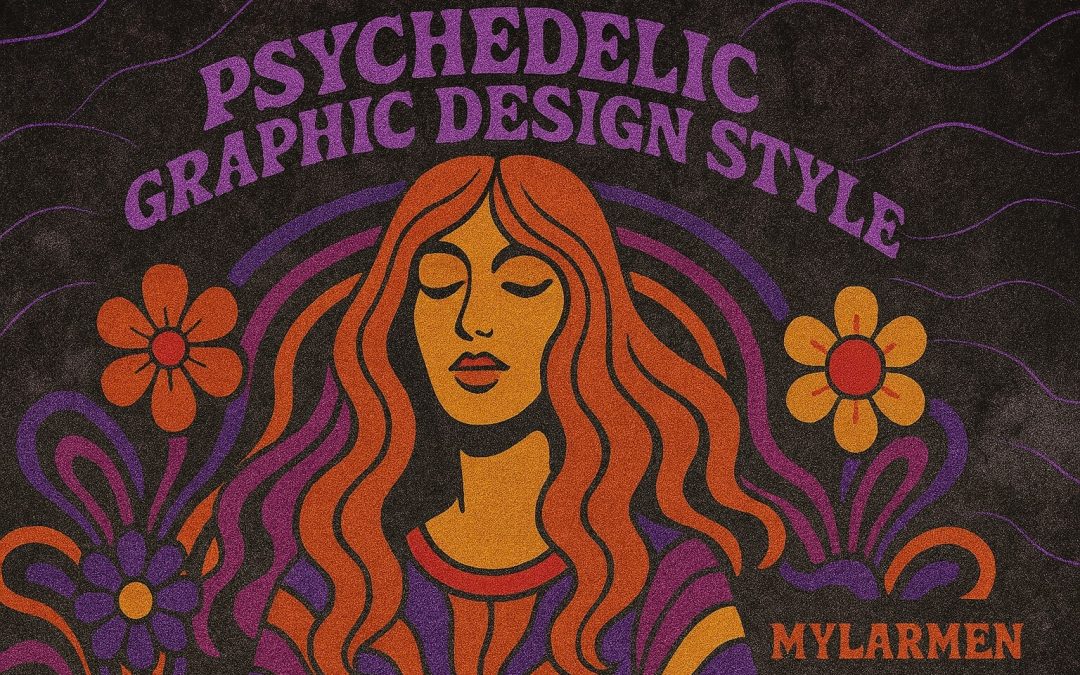
“Psychedelic” implies going big on color and distorted, spontaneous forms and layouts that often create dissonant effects. Another distinctive feature of the psychedelic design style is blending objects and pushing them close or emerging out of each other as fluid, curvilinear, and melting shapes.
What does this look like in detail?
Drawing inspiration from altered states induced by psychoactive substances, psychedelic artists seek to create a feeling of mysticism, infinity, and otherworldliness. While drug trips can be too overwhelming, psychedelic-style graphic design and artwork mostly focus on rendering those as positive and transformative.
That is why the key components of this style are:
- Fantasy, abstract, or cartoonish imagery
- High-contrast, fluorescent, and clashing colors
- Dramatic layouts, curves, and typography distortions
- Fractal, kaleidoscopic, and spiral patterns
- Concentric circles
- Shapes melting, oozing, and morphing into each other
However, no matter how lurid and intense the combinations of collages and squashing together may seem, these are only sketchy imitations of psychedelic experiences. And you might just dismiss some as high concentrations of visual noise.
So, what is it that makes this style so rad and captivating?
Illusion of movement
When bent and wrought out of alignment and saturated with colors, the images and typography seem to come alive and move. It looks like they are toppling over, wobbling, rippling, flowing, or spiraling. The undulating curves, swirly backgrounds, and kaleidoscopic patterns can even appear animated.
This explains the phenomena of psychedelic design transcending time and space to keep resonating with creatives and audiences alike. Conveying movement and ecstatic energy, it retains its trippy and hypnotic appeal. Besides, reality-bending and self-discovery experiences are at their peak popularity today, whether guided by mind-altering substances or not. So, the style is every bit as relevant now as in the ‘60s.
It is coming back with a bang
When it comes to branding and advertising, many popular styles and techniques are so overused that they fail to stand out. This isn’t the case with psychedelic-style graphic design. It doesn’t beg for attention but rightfully claims it.
Another notable advantage of this style is its relaxed combination of easily recognizable elements that can be made unique to the brand or product line. By incorporating it in today’s product labels, displays, or marketing materials, you get a dynamic way of putting your logo or core image front and center.
Psychedelic design services are currently in demand due to this style being highly captivating and likely to work well in the context of dwindling attention spans. Its ever-efficient visual mystery is of great value. If the viewer can’t tell what it is or read it at a glance, they may feel like taking a closer look out of sheer curiosity.
Is the psychedelic style appropriate for your brand?
Reimagining brands and products in this aesthetic can be a fantastic way to convey a sense of:
- Expansion and transformation
- Freedom of expression
- Self-exploration, appreciation, and nurturing
- Enlightening spiritual journey
- Creative experimentation
The psychedelic style lends itself to a wide range of brands and product types. Here’s where it works best when adopted at the design stage for promotional effects:
- Cannabis labels
- Packaging for psychedelic substances
- Holistic practices for healing physical and mental trauma or stress
You don’t have to make your creations as busy and super-saturated as the psychedelic graphic design style of the 1960s. The modern take on it can include gradients and 3D effects to enhance visual depth and achieve that dynamic, multi-dimensional look. This way, both imagery and typography can be less repetitive and cluttered.
Fresh spins on psychedelia tend to be easier on the eyes, while optical illusions and distortions are more sophisticated and polished due to the advanced tech we have in our design toolbox. Its common rendition today is vibrant color and gradients on a dark background, which is relevant to one of the core ideas of psychedelic perceptions – the duality of darkness and light infused with color. This yields a cleaner look with less repetition and visual noise.
Talk to an expert
Which psychedelic-style elements could be the right fit for your image or make your product feel fantastic and extraordinary? This question is best answered by design experts with sufficient experience and understanding of your industry and niche.
Connect with our team to determine the best way to incorporate psychedelic mystery into your product or packaging designs.