

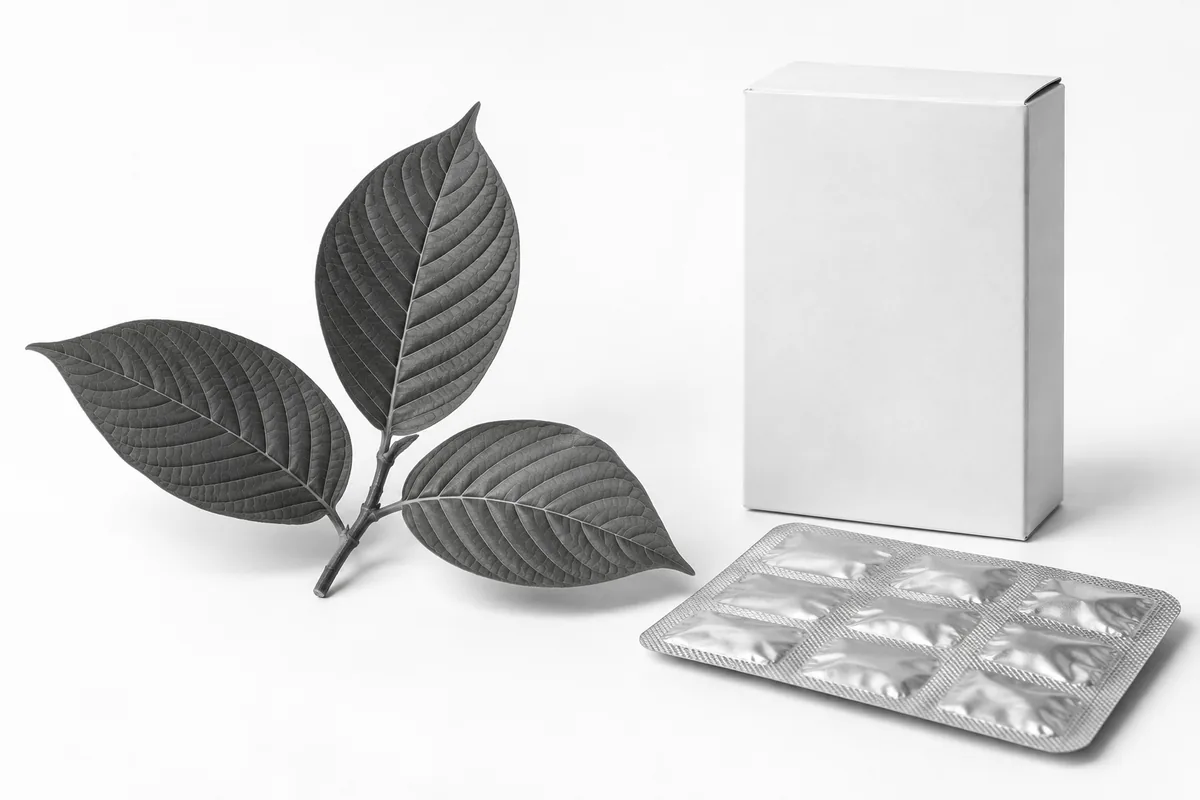
Kratom and 7-OH are related terms, but they do not describe the same thing. Kratom is the plant Mitragyna speciosa and material made from its leaves. 7-OH, short for 7-hydroxymitragynine, is one of its alkaloids. Products sold as concentrated or enhanced 7-OH should not be assumed to have the same composition as kratom leaf.
That distinction matters when reading a label. Mylarmen approaches this subject through product information and packaging: a plant name, an extract claim, and a named chemical ingredient communicate different facts. This overview explains the terminology; it is not a recommendation to use either substance or a treatment guide.
What is kratom?
The FDA’s kratom overview identifies kratom as a tree native to Southeast Asia. Mitragynine is its principal alkaloid, while 7-OH is a minor constituent of natural leaves. A dried leaf product, an extract, and a formulation with enhanced 7-OH are therefore different descriptions, even when the front of each package uses the word “kratom.”
What is 7-OH?
7-OH names a particular compound rather than the whole plant. The FDA distinguishes trace naturally occurring 7-OH from products with added or enhanced levels. It warns that the latter can cause serious harm, including addiction and withdrawal, and recommends avoiding them. A shared botanical origin does not make the products interchangeable.
Kratom leaf, extract, and 7-OH compared
| Label term | What it describes | What the term alone does not establish |
|---|---|---|
| Kratom leaf | Material from the kratom plant. | A verified amount of each alkaloid, or a safety finding. |
| Kratom extract | A preparation described as extracted from kratom. | The full composition or whether 7-OH has been enhanced. |
| 7-OH / 7-hydroxymitragynine | A named alkaloid, sometimes emphasized in concentrated products. | Equivalence to leaf material, medical approval, or permission to sell. |
Is 7-OH stronger than kratom?
The FDA describes 7-OH as having greater activity at the mu-opioid receptor than mitragynine. That finding is not a consumer dosing conversion. Comparing a compound with a variable plant preparation does not produce a reliable “one tablet equals this much leaf” rule. This page does not provide potency multipliers, doses, or instructions for switching between products.
What do the health and regulatory sources say?
The FDA warns against kratom use because of serious risks, including liver toxicity, seizures, and substance use disorder. It also states that there are no legally marketed prescription or over-the-counter drugs containing kratom or its known alkaloids in the United States. See its current kratom guidance for the full context.
For concentrated 7-OH, the agency states that it is not approved for medical use and is not lawful as a dietary supplement or an ingredient added to conventional food. The FDA consumer notice explains those distinctions. A product’s availability in a shop does not settle its regulatory status. For questions about symptoms, interactions, or stopping use, speak with a qualified healthcare professional.
Reading the package without confusing the terms
- Identify the named ingredient. Read the ingredient panel as well as the front label. A broad botanical description may not explain the full formulation.
- Check what a number refers to. The weight of a package, an amount of extract, and an amount of a named compound are different measurements. Check whether any amount is stated per unit or for the whole container.
- Keep identity separate from claims. Words such as “natural,” an attractive design, or a laboratory-style graphic are not proof of safety or approval.
- Look for traceable information. Product identity, batch references, and responsible-business details make a label easier to interpret. They do not by themselves validate the contents.
Why this belongs in a packaging conversation
Clear packaging begins with accurate product information. Designers need an approved ingredient description, legible information hierarchy, and room for the product-specific text supplied by the responsible business. They should not invent medical benefits or imply that a graphic treatment provides regulatory approval.
For the design questions behind that process, read our 7-hydroxy packaging review guide or explore packaging and branding resources.