

Custom cannabis labels.
Labels for flower jars, pre-rolls, edibles, vapes, and concentrates. Designed in the studio and printed with the rest of the pack.
Two jobs, one surface
A cannabis label works at two distances. Across a case it is the brand: the name, the strain or the flavor, the weight. In a reviewer’s hands it is a document: the figures the market asks for, the warning, a batch or lot field, often a barcode or a QR. Those jobs share one surface, and the surface is rarely flat.
It wraps a jar, bands a tube, peels open when a small pack cannot hold the panel, or sits on a carton that already has a tuck and a seam. Cannabis label printing starts with that container. We measure the usable panel, the curve, the cap, and the seam before the artwork is drawn. The same team can design the pouch, the box, or the tube beside it. Printed bags are scoped on custom mylar bags.
Where the label goes
The format follows the container. A template sized for a pouch front will not survive a jar, a tube, or a cartridge.
Flower jars
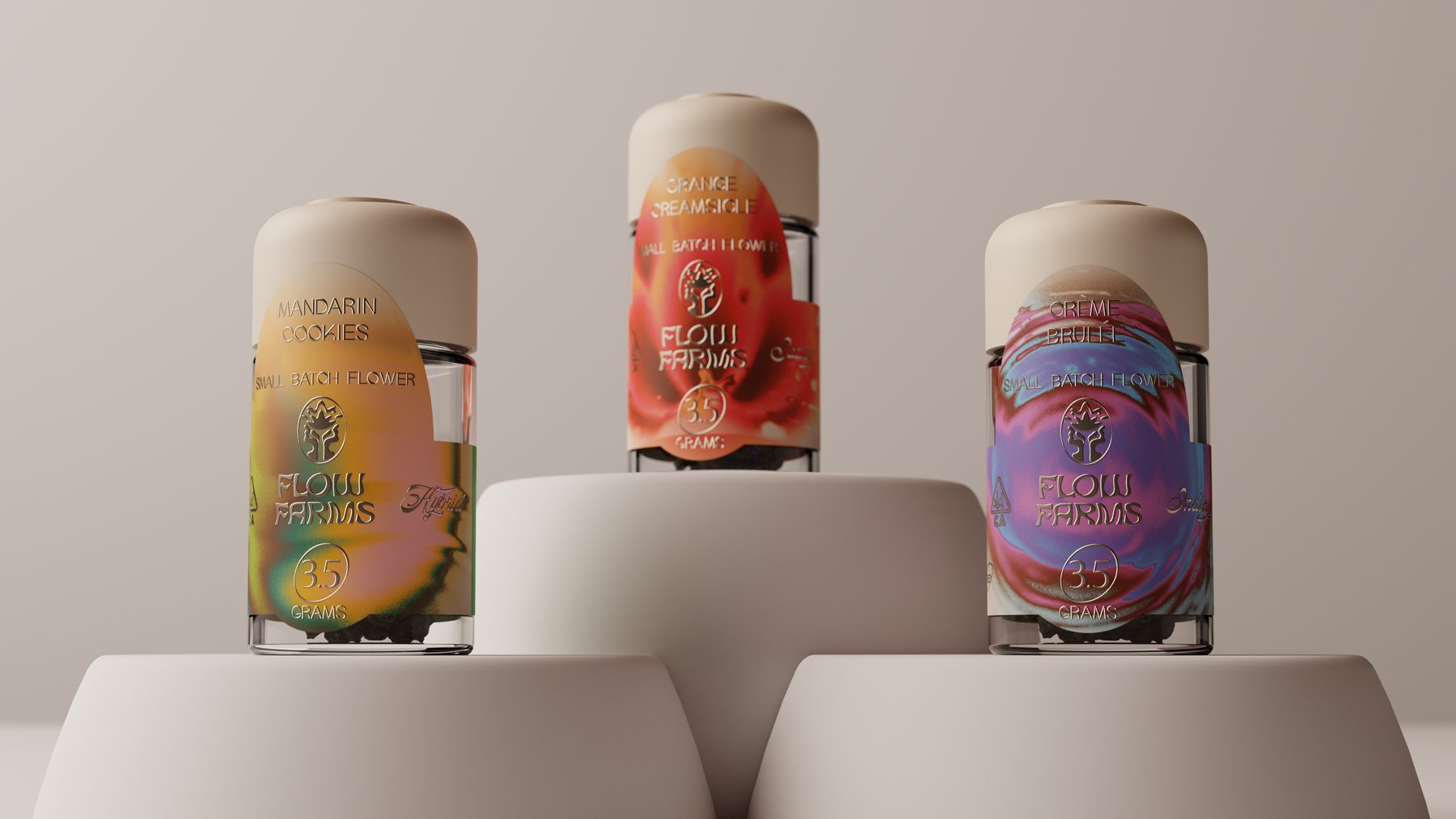
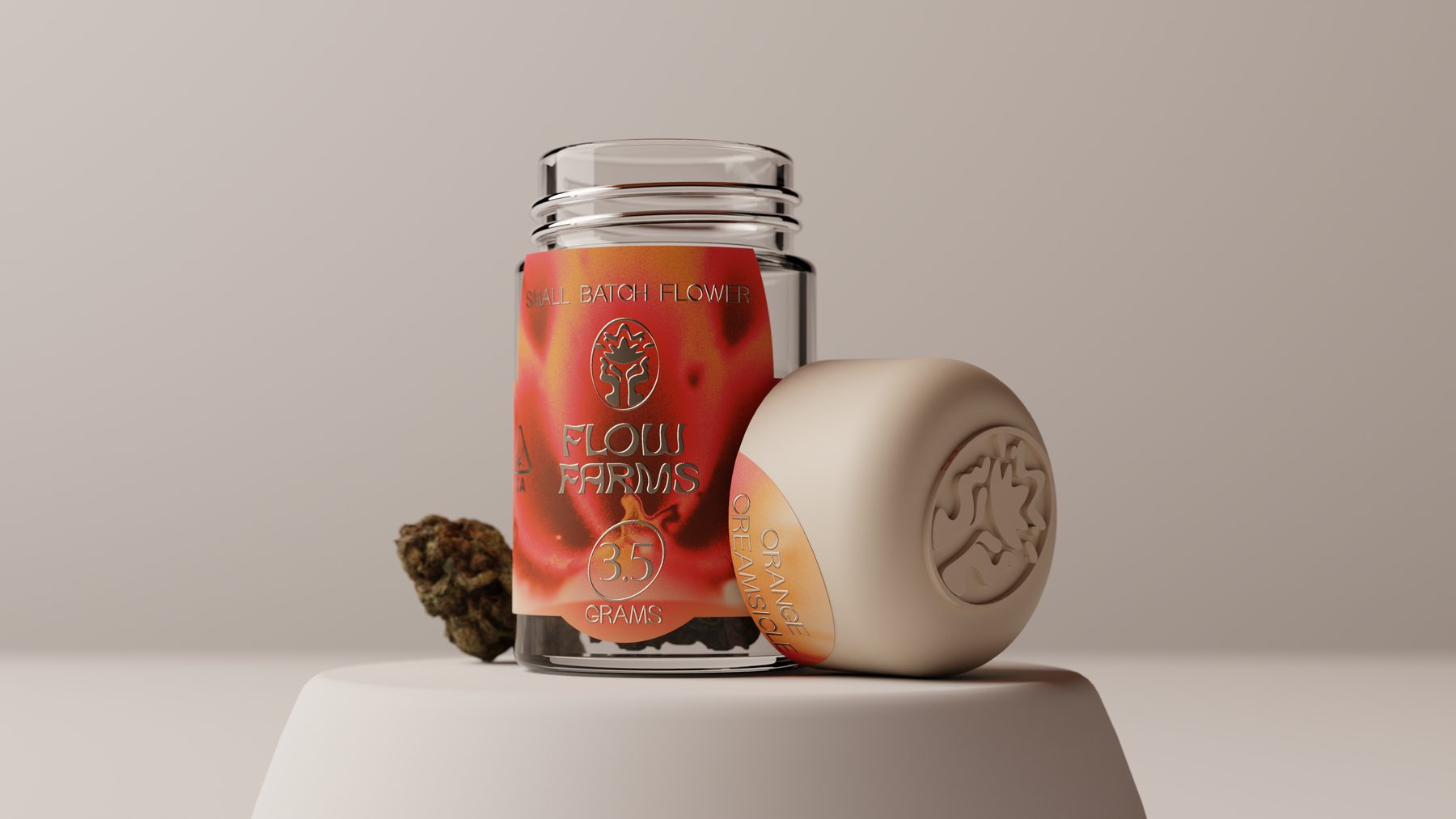
A wrap has to read as it turns away, and it has to survive its own overlap. Flow Farms stacks the wordmark and the weight on a 3.5 g jar and lets the strain color carry the rest. We start from the jar: diameter, lid clearance, and which words fall on the seam.
Pre-rolls
A tube shows one face, so the product name has to live there. Warnings, a lot number, and a code go around the back. The wrap is drawn to the tube’s diameter and the height the cap leaves free, not to a rectangle on a screen.
Edibles
Gummies, chocolates, and drinks need room for ingredients and serving information as well as the name. On a small container that copy may not fit outside. Emerald Hour’s Canadian tube uses a label that peels open and reseals, so a bilingual panel fits without covering the product.
Vapes
A cartridge, a disposable, and the carton around them are three surfaces. The device may only hold a name. The carton carries the rest, and the two have to match. We draw the small panel first. A pouch layout shrunk until the type fails is not a vape label.
Concentrates
Live resin, rosin, and wax usually leave a short jar and a lid. The front may only hold the name and the weight. The warning, the cannabinoid line, and the batch field are placed first — front, back, or lid — so a late line of copy does not hit the wordmark.
Rolls and sheets
Roll labels are wound for a machine. A line that applies them automatically wants one size and a layout that stays put from SKU to SKU, except in the fields that change. Sheet labels are cut and stacked. They suit hand application, a first sample, and a short run while a range is still being proved.
The choice follows the applicator and the number of versions. It is not a difference in quality. Tell us which you apply, or that you have not decided. We do not publish a core size, a count per roll, or a standard sheet. Those are set with the container and named in the quote.
Finish, without a menu
Matte, gloss, foil, and a softer film each change how type reads under case lighting. A metallic ground can swallow a warning. A heavy texture can soften small type. The finish is specified with the stock and checked on the applied label, not only on a screen proof.
Glass, plastic, a tube, and paperboard take a label differently. Adhesion is confirmed on the actual surface. A material name is not a specification. The quote names the stock once the container and the application method are known.
The copy comes from you
State labeling requirements are not one template. Flower, an edible, a vape, and a concentrate can each ask for different fields, and two states can disagree about the same product. The layout accounts for the requirements in the brief. It does not certify that the label is legal.
You confirm the text with your compliance team, or with the adviser for that market, and send the approved copy. Warnings stay readable, cannabinoid figures keep a fixed place, batch and lot fields stay open, and a barcode or QR sits clear of the seam. If the copy is unfinished, we still draw the structure and mark the open fields.
How that panel is planned is in planning a cannabis label layout. The layout pass is product label design.
One studio
Design is in-house. Designers, structural engineers, and packaging specialists share the brief, so a label that looks right is one that can be printed and applied. Concept to production stays under one roof.
A company with several brands usually wants one partner across every format. The jar label, the tube, the pouch, and the carton can share a system and a contact. The wider range stays in packaging design and production.
Minimums flex with the format, the finish, and the number of SKUs. There is no published price list and no single minimum. Ask for a quote with the product and the quantity.
How a label gets made
Design, then a proof, then the run, then delivery. Tell us the container and when you need it.
Design
Container, dieline, and artwork. Type is checked at actual size, including the seam, the cap, and the curve.
Proof
A print proof, on the container when we have one. Copy, placement, and the finish are confirmed before production begins.
Production
Flexo, rotogravure, or a shorter digital run, with press checks. One contact from approved artwork through the run.
Delivery
Packed and shipped where you need it. The timeline comes back with the quote. We do not publish a standard turnaround.
Selected labels
Four projects already on the shelf.
Flow Farms
A wrap on a 3.5 g glass jar. Strain color, wordmark, and weight in one stack.
View the project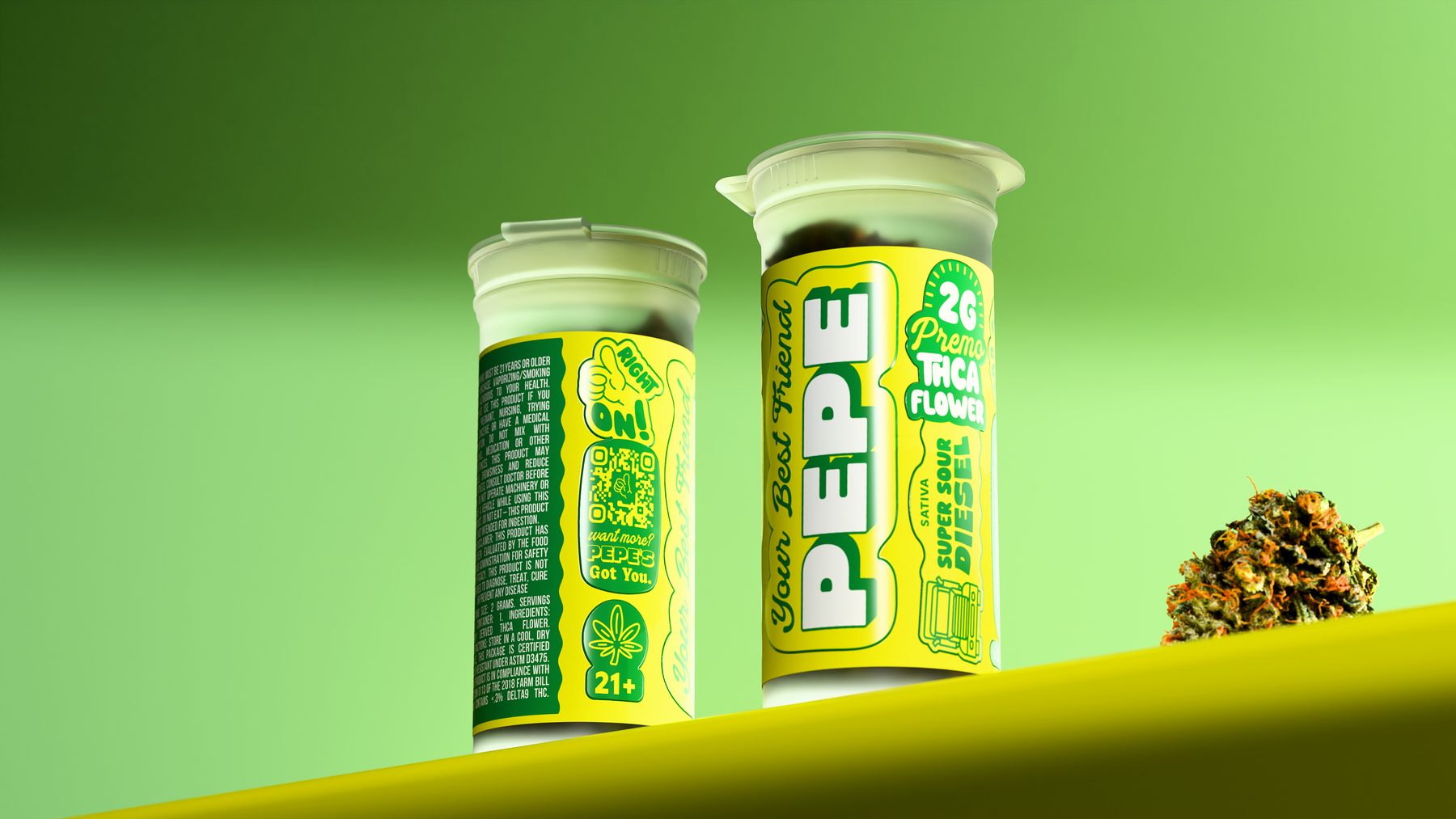
PEPE
Pop-top tubes for 2 g of flower. Wordmark on the front. Warning, QR, and the 21+ mark on the back.
View the project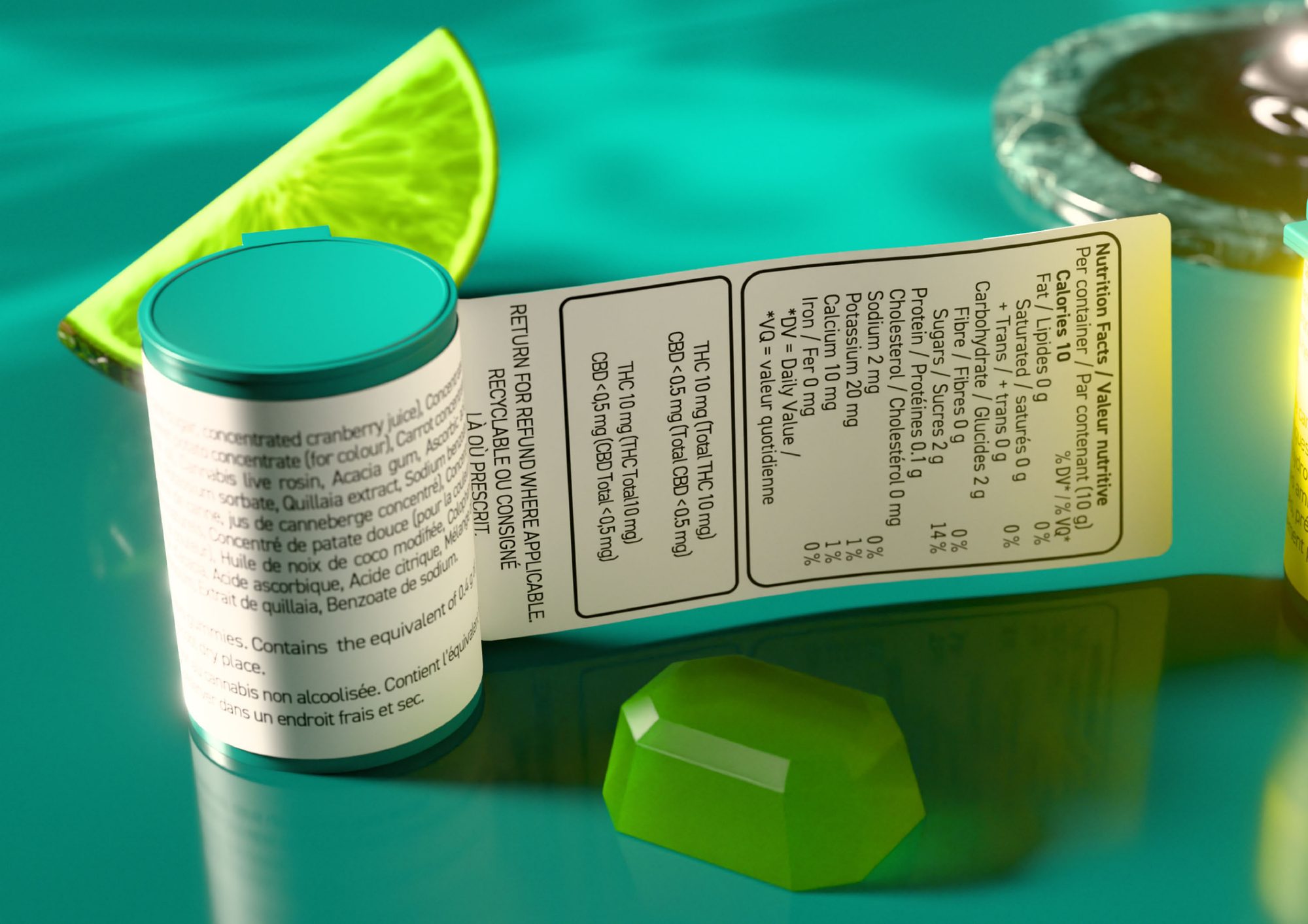
Emerald Hour
A peel-open label, so a bilingual panel and a nutrition table fit on a small tube.
View the project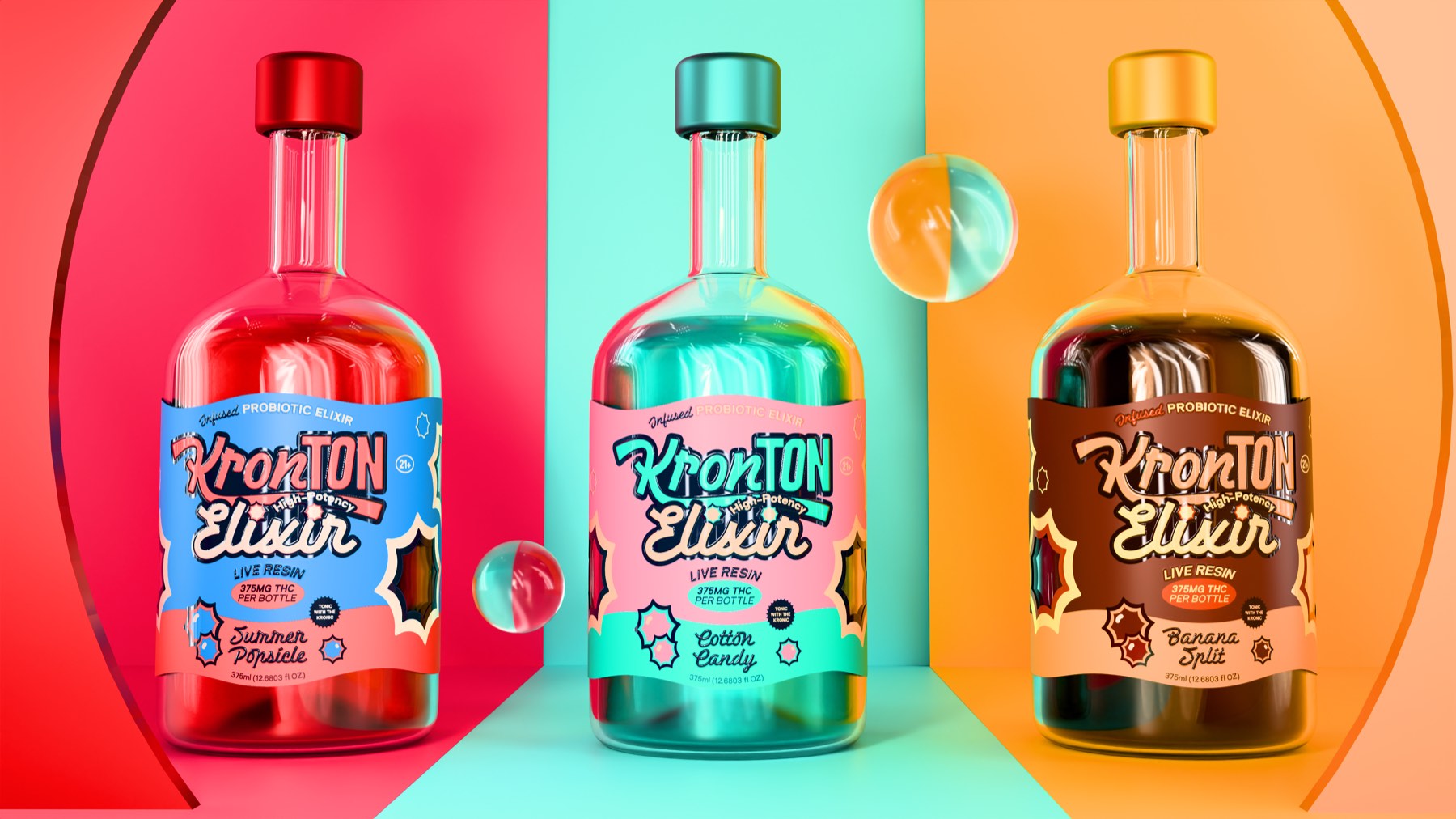
Kronton
Wrap labels on bottles of live resin elixir, with a window onto the liquid.
View the projectQuestions buyers ask
What cannabis products do you print labels for?
Flower jars, pre-roll tubes, edibles, vapes, and concentrates, plus the carton or pouch that ships with them. The label is drawn to the container: a wrap, a band, a shaped label, or a peel-open panel when the outside cannot hold the copy.
Do you print roll labels and sheet labels?
Both. Rolls suit a line that applies labels by machine. Sheets suit hand application, samples, and shorter runs. The format follows the applicator and the number of versions, and it is named in the quote.
Do you design the label, or only print files we send?
Both. The studio designs the identity and the layout, and it also prints from approved files. Artwork is reviewed at actual size, on the container when we have one, and on a print proof before production.
Will the label meet state labeling rules?
The layout is built around the requirements in your brief and around copy your team has approved. We do not guarantee that a label meets a state’s rules. Your compliance team, or the adviser responsible for that market, confirms the text before production.
What is the minimum order, and how long does it take?
Minimums are flexible and quoted against the format, the finish, and the number of SKUs. We do not publish a single minimum or a standard turnaround. Tell us the product, the quantity, and when you need it, and we will come back with a plan, a timeline, and a quote.
How do we start a cannabis label order?
Send the container, the product, and the quantity through the contact form, or email info@mylarmen.com, or call 1-908-858-2817. A sample beats a guessed size. The studio is in Montclair, New Jersey. A person replies within one business day.
Ask for a quote.
Tell us the container, the product, and when you need labels in hand. We’ll come back with a plan, a timeline, and a quote. Or call 1-908-858-2817 · info@mylarmen.com. Montclair, New Jersey.