

Custom boxes.
Folding cartons and tuck boxes for cannabis and CPG brands. One studio in Montclair, from the dieline through production.
What we make
The box is specified around the product. A folding carton is the format most lines start with. A cartridge or a disposable needs a carton drawn to the device, and that scope stays on vape packaging.
Folding cartons
A paperboard carton, scored and closed with a tuck or a glue flap. Size, board, and closure are set around the product before the art is locked. Structure and artwork are the subject of paper box design, and the format notes stay on paper box packaging. How a tuck is chosen is in the custom tuck box guide.
Pre-roll boxes
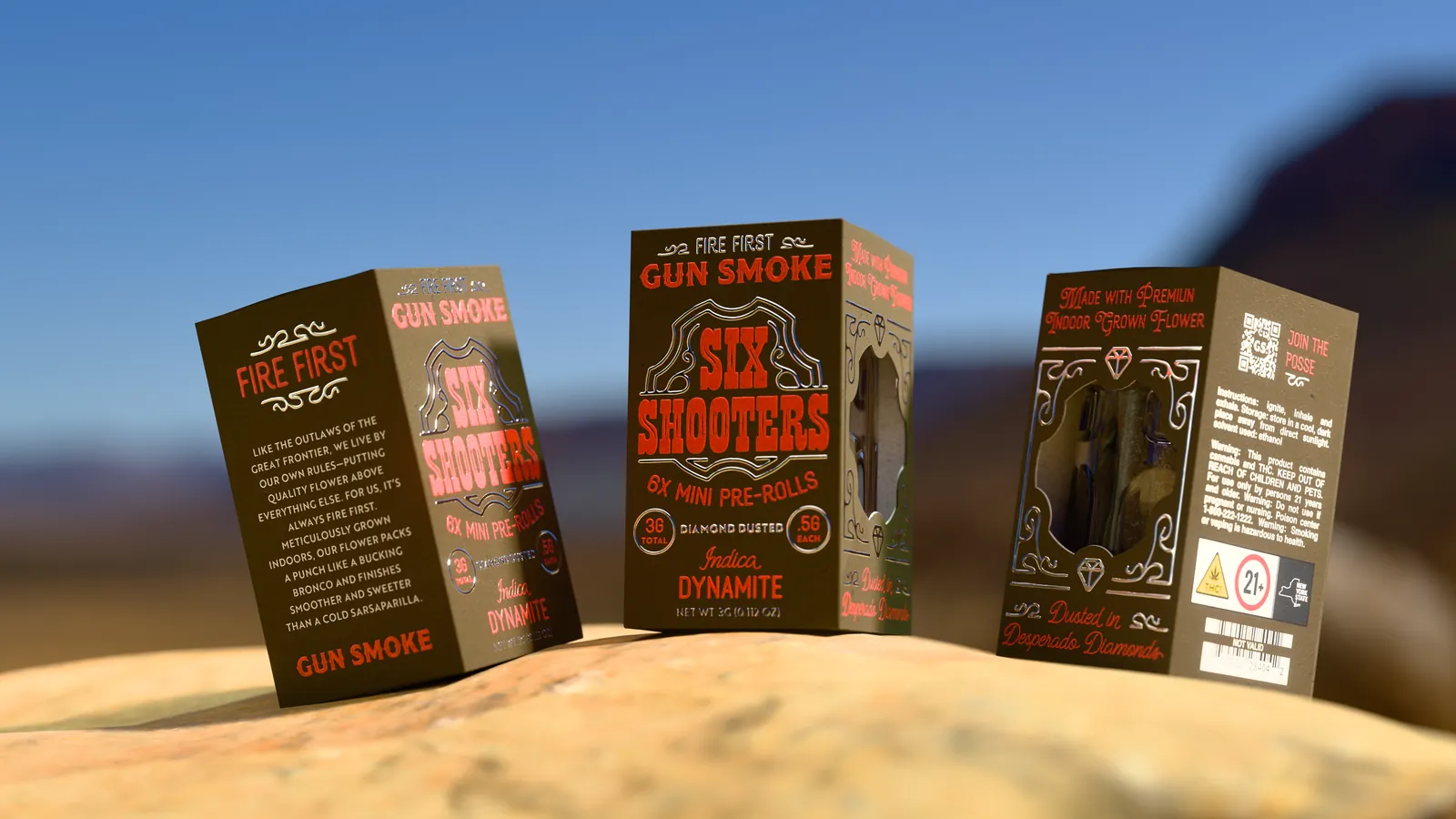
A single, or a count. Fit starts with length, diameter, and how many units share the pack — the same measurement pre-roll packaging starts from. FREEO runs a five-pack carton on the same panel system as the flower box. Gun Smoke ships six minis in a carton with a die-cut window.
Edible boxes
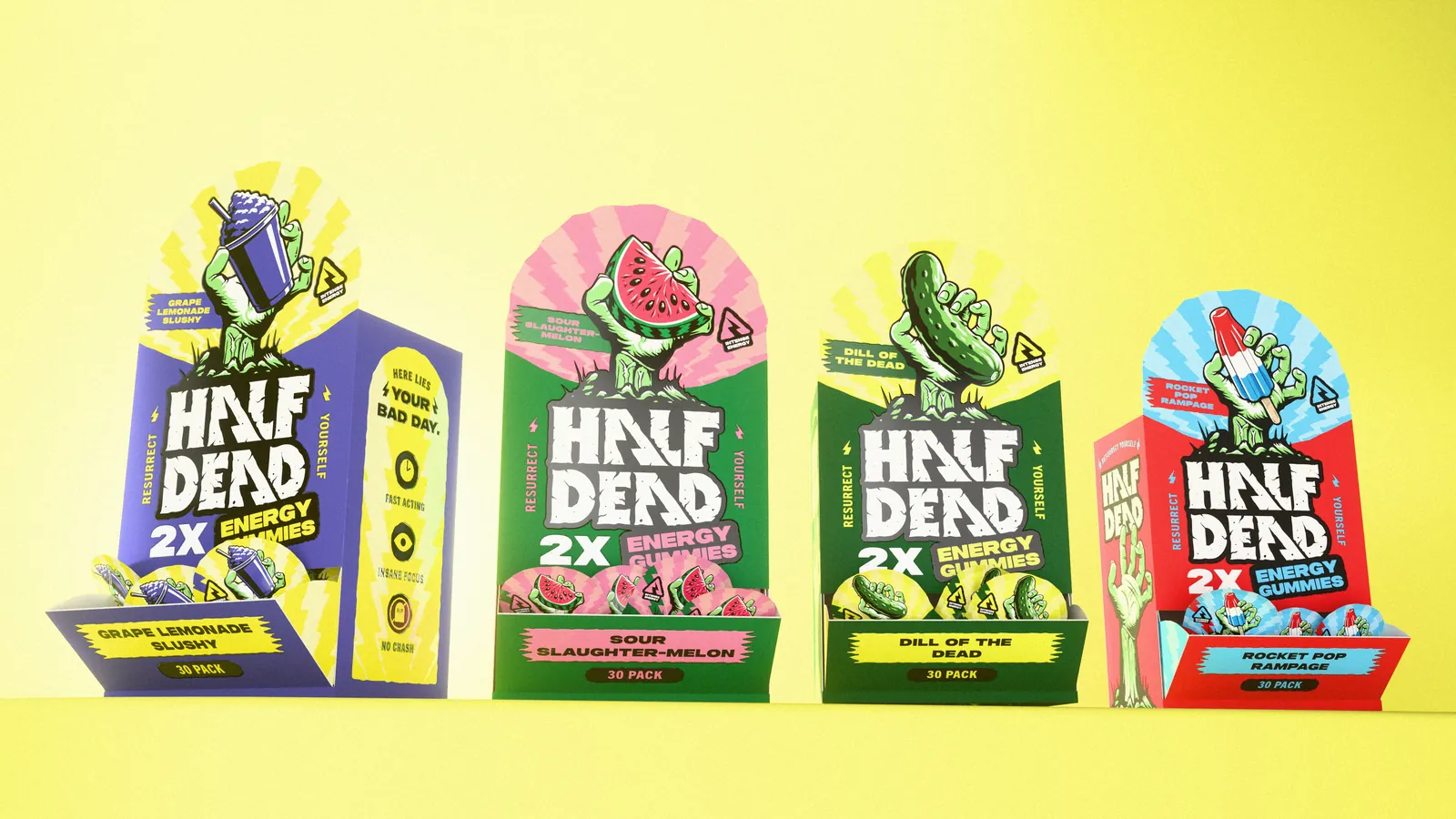
Sized to the count, not to an empty board. A gummy line is scoped with gummy packaging design. Half Dead’s 30-pack is a masterbox that tears into a counter display.
Display boxes
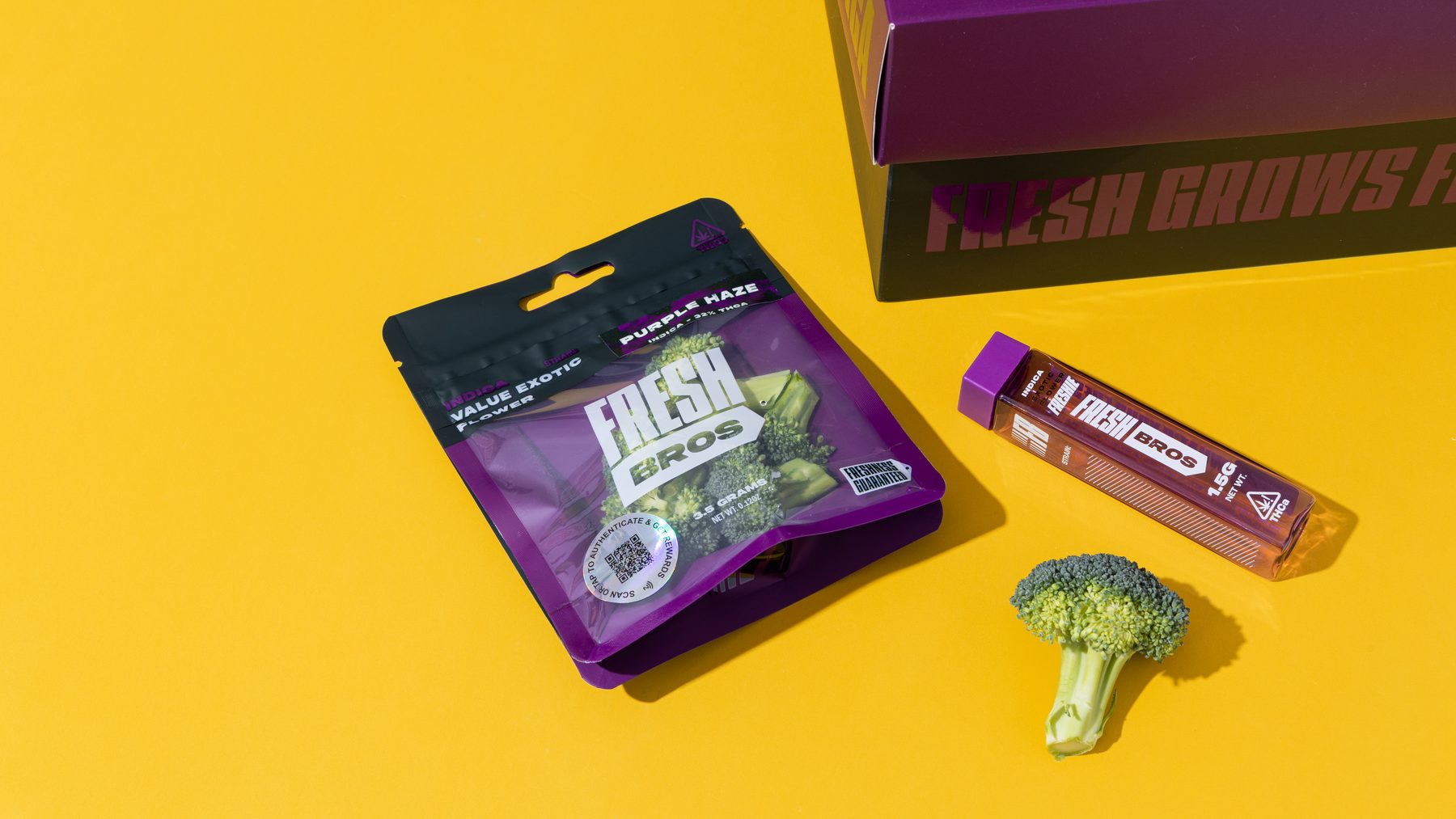
A counter box, or a shipper that opens into the display. Fresh Bros uses a 10-count counter box beside the pouch and the tube. The front has to read on the shelf, and the box still has to close for the case.
Rigid boxes
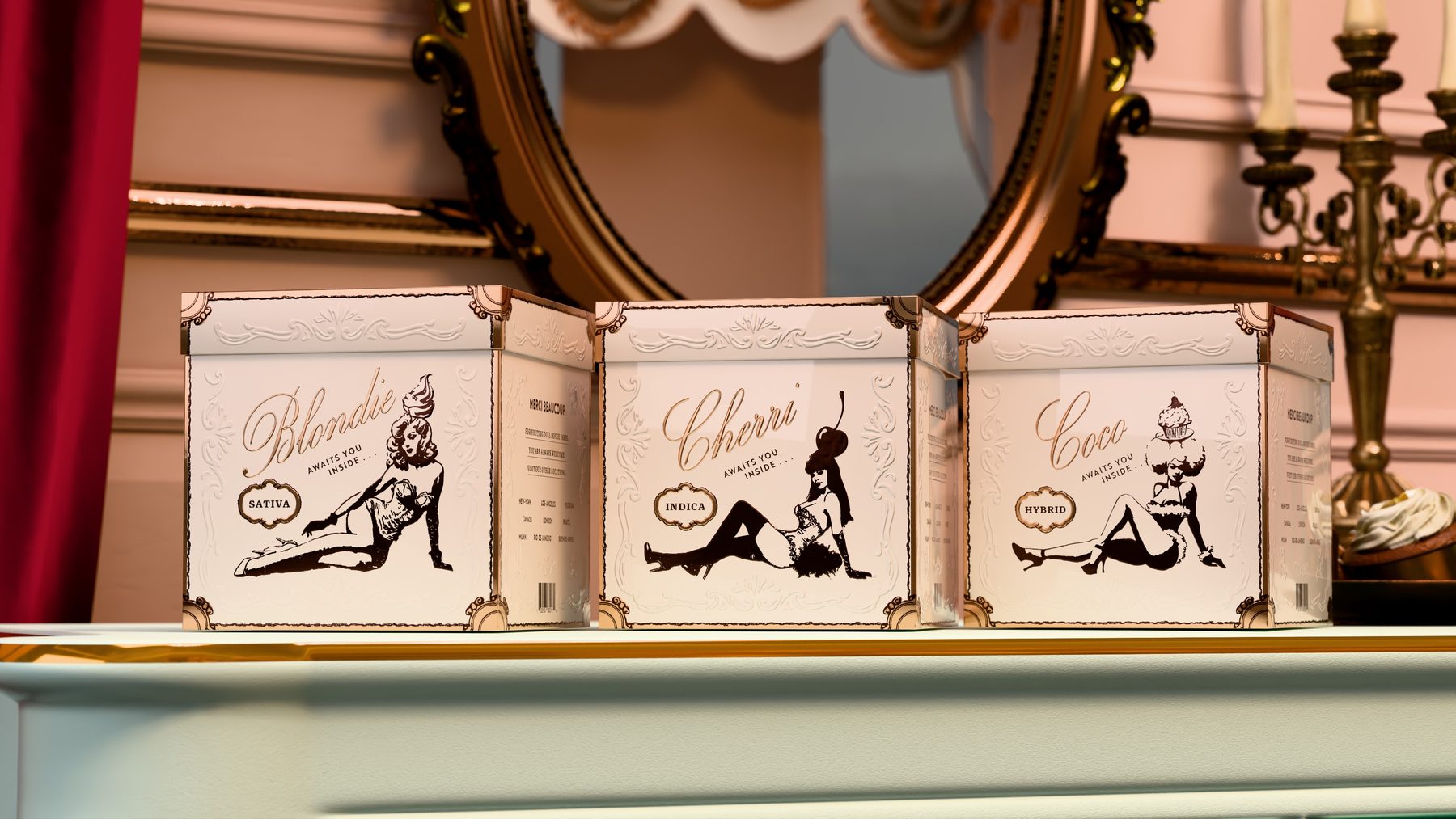
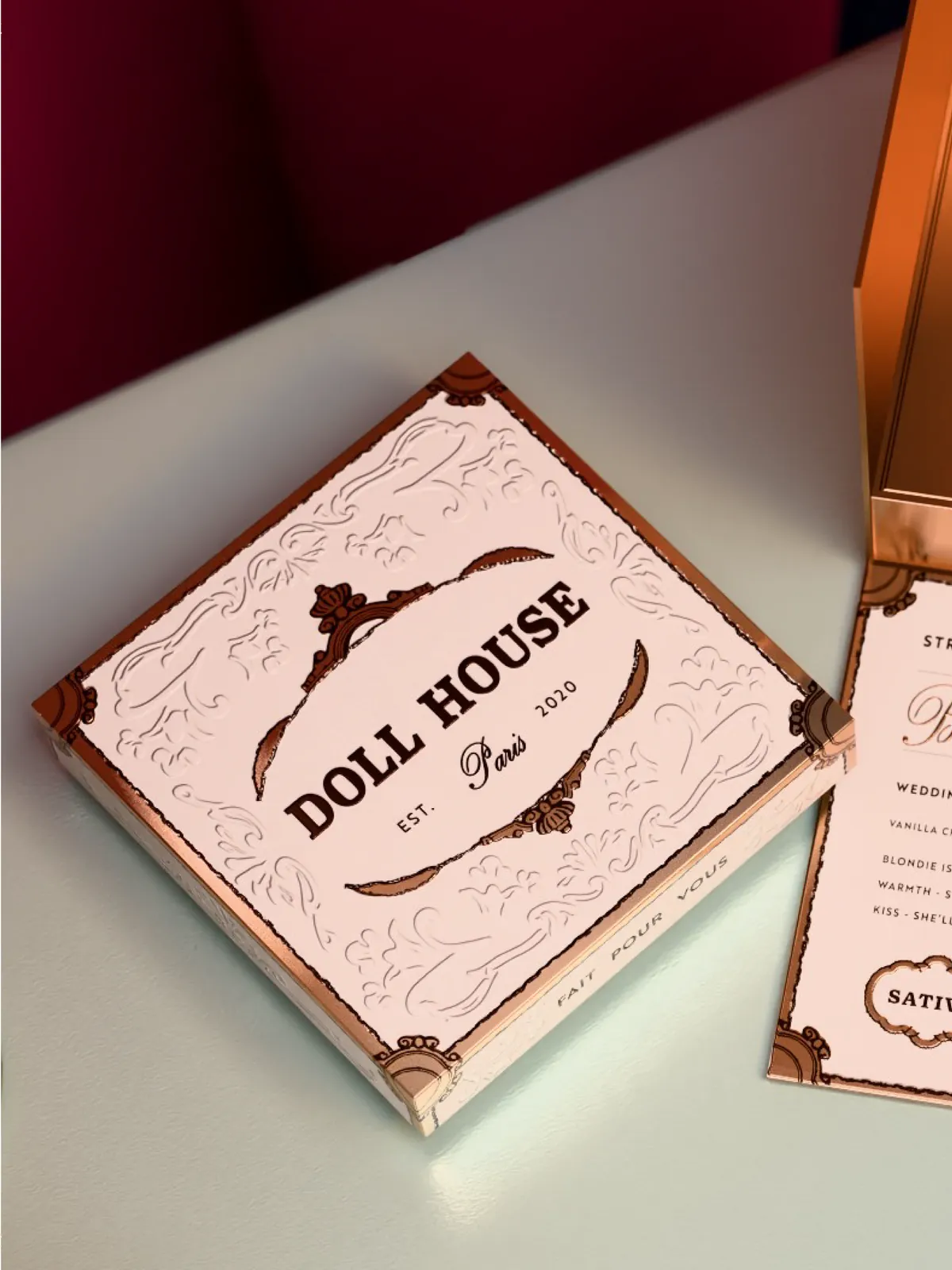
Specified when the product wants a separate lid rather than a tuck. Doll House lifts a lid on the gift box, and the 24-count master opens into four drawers. Folding cartons and rigid boxes are compared using the product’s weight and dimensions.
Structure and finishes
These are set with the box, not added after the art is locked.
Dieline
The flat drawing: panels, folds, glue areas, and the closure. A flat dieline and a folded sample show different problems, and both get reviewed. Fit, opening, and assembly are structural packaging design.
What goes inside
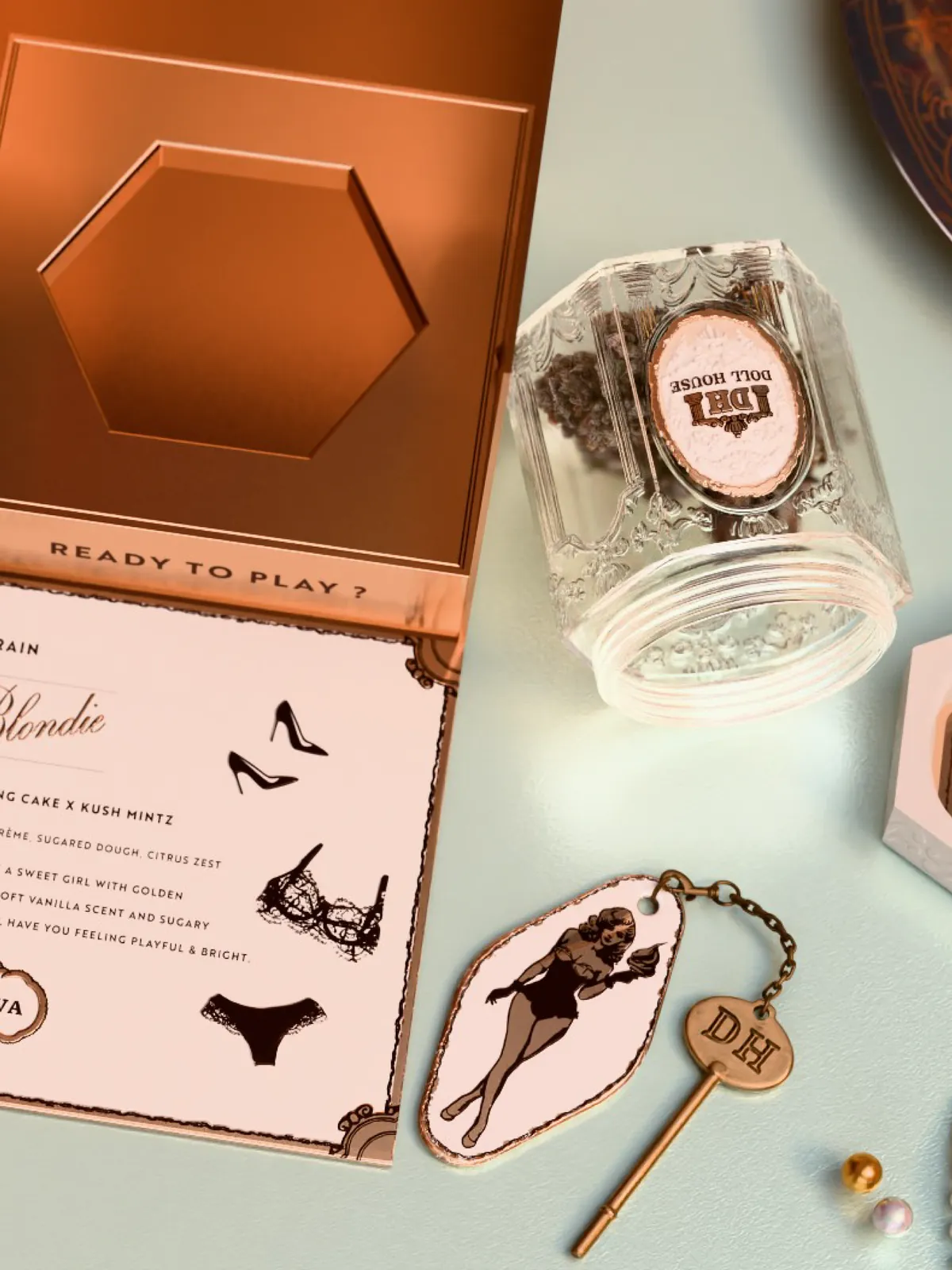
The box may hold the product, or it may wrap a jar, a pouch, or a tube. Inserts and the clearance around them are drawn with the outside. Doll House puts the jar in a gift box. FREEO puts the flower behind a window in the carton.
Finishes
Matte and soft-touch where the board can take them. Foil, deboss, and emboss where the stock can hold the impression. Doll House embosses the ornament and prints a metallic. Gun Smoke uses foil on the pre-roll carton. The finish is checked on the board, not only on a screen proof.
Who it’s for
Cannabis brands with more than one product on the shelf: flower, pre-rolls, edibles. The box, the pouch, and the label have to agree. CPG brands packing a gummy, a supplement, or a counter display, including a line that runs several SKUs off one structure.
Multi-product companies usually want one partner. We work with large multi-state operators and with smaller brands on a first product. A line that also needs pouches, labels, tubes, or tins stays in packaging design and production, with the same team. The identity for that line is cannabis packaging design.
How a box gets made
Design, then the dieline, then a proof, then the run. Tell us what you’re packing and when you need it. We’ll come back with a plan, a timeline, and a quote.
Design
The wordmark, the panels, and the fields that change by SKU, drawn on the dieline rather than on a blank rectangle. Identity and artwork for the line are cannabis packaging design.
Dieline
Measured from the product. Folds, glue, and the closure are marked before the layout is finished, so type does not land on a score.
Proof
Reviewed in 2D, in a photorealistic 3D mockup, then on a prototype and a print proof. The specification is confirmed before production begins.
Production
One contact from the approved file through the run. Packed and shipped where you need it. The timeline comes back with the quote. We do not publish a standard turnaround.
Why one studio
Design is in-house. Designers, structural engineers, and packaging specialists work the same brief, so the box that looks right is a box that can be made. Concept to production happens under one roof — the same team that draws the pouch and the label.
A line does not have to split the box, the bag, and the label across three vendors. Custom mylar bags and custom cannabis labels stay with this studio when the job stays here.
Minimums flex with the format, the finish, and the number of SKUs. There is no published price list and no single minimum. Ask for a quote with the product and the quantity.
Selected boxes
Four projects already on the shelf. Each links to the full case.
Fresh Bros
A 10-count counter box on the same system as the pouch and the pre-roll tube. The strain type sits on the front.
View the project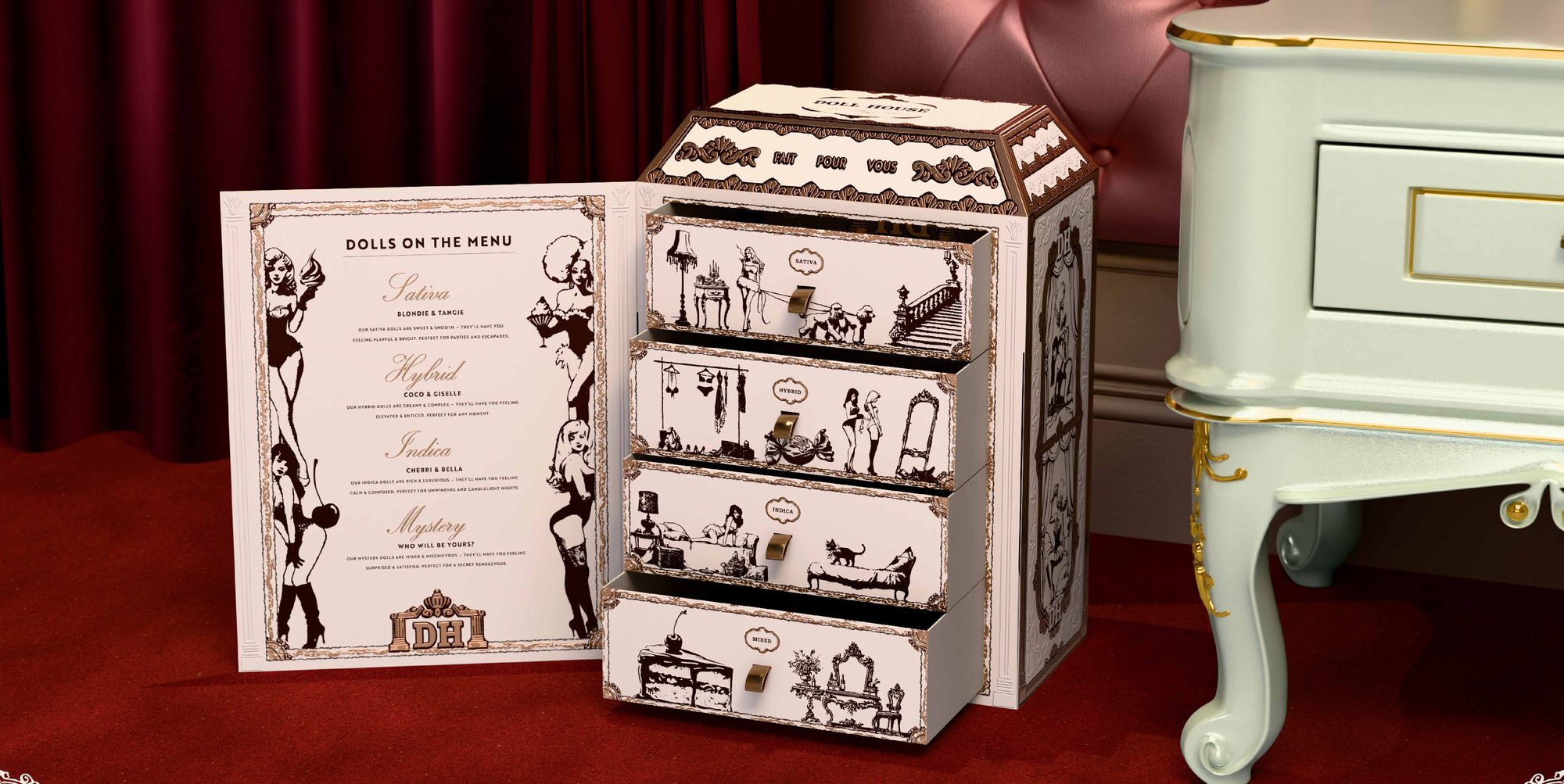
Doll House
A 24-count master box that opens into four drawers. Each strain’s gift box sits on the same ornament.
View the project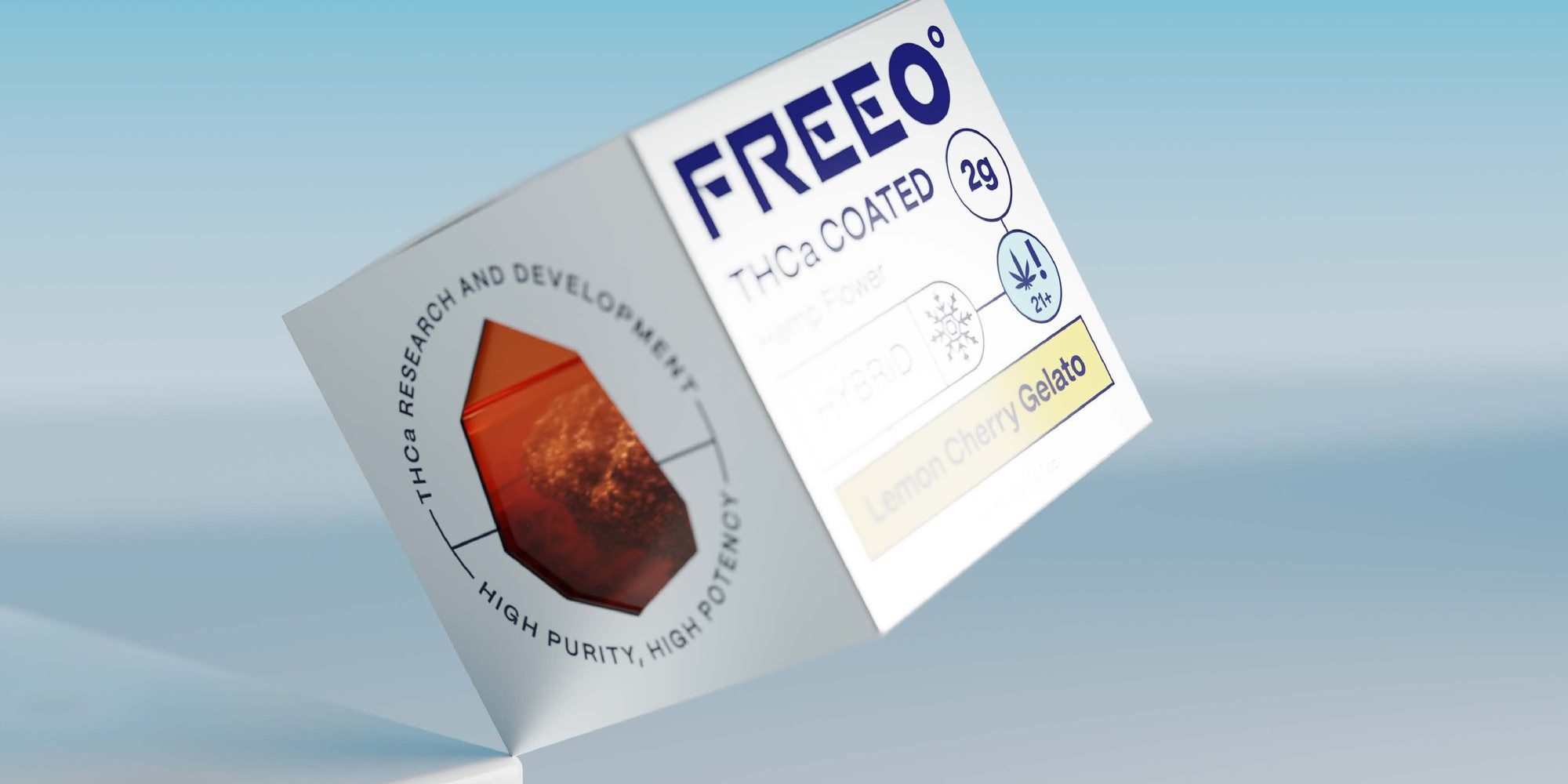
FREEO
A folding carton for 2 g coated flower, with a window. The five-pack pre-roll carton uses the same panels.
View the project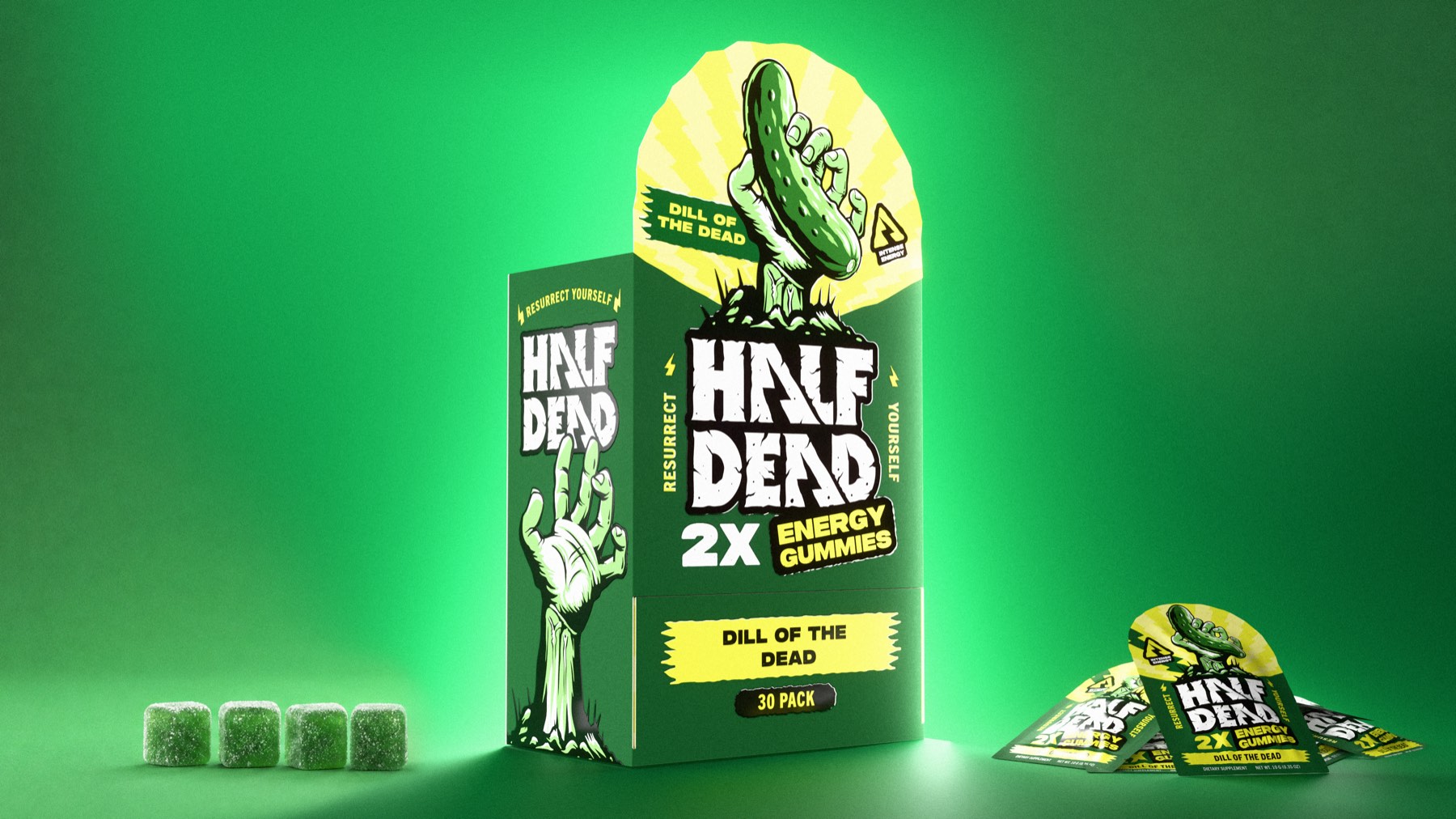
Half Dead
A CPG line. The 30-pack masterbox tears into a counter display, one colourway per flavour.
View the projectQuestions buyers ask
What formats of custom boxes do you make?
Folding cartons and tuck boxes, pre-roll boxes, edible boxes, and counter or display boxes. A rigid box is specified when the product and the presentation call for a separate lid. A cartridge box is drawn to the device and scoped with vape packaging. The format follows the filled product: how it displays, how it packs, and how much print the panels need.
Can the box carry our logo?
Yes. A wordmark we draw, or a logo you already use, is placed on the dieline, clear of the folds and the glue. The same mark can sit on the pouch and the label when the line needs more than a box.
Do you design the dieline, or only produce files we send?
Both. The studio designs the structure, the dieline, and the artwork, and it also produces from approved files. The box is reviewed in 2D, in a photorealistic 3D mockup, and on a prototype and a print proof before production.
Which finishes can you specify?
Matte and soft-touch laminates, foil, deboss, and emboss, where the board can take them. The finish is reviewed on the board, not only on screen. A finish that looks right on a flat proof can still crack on a score, so it is checked on the folded carton.
Will the box be child-resistant, or meet state packaging rules?
A tight tuck is not, on its own, child-resistant, and we do not describe a box as child-proof. When a project requires that performance, it depends on documentation for the exact configuration. The layout is built around the requirements in your brief and around copy your team has approved. We do not guarantee that a box meets a state’s rules. Your compliance team confirms the text and the closure before production.
What is the minimum order, and how long does it take?
Minimums are flexible and quoted against the format, the finish, and the number of SKUs. We do not publish a single minimum or a standard turnaround. Tell us the product, the quantity, and when you need it, and we will come back with a plan, a timeline, and a quote.
How do we start a custom box order?
Send the product, the format you have in mind, and the quantity through the contact form, or email info@mylarmen.com, or call 1-908-858-2817. A sample beats a guessed size. The studio is in Montclair, New Jersey. A person replies within one business day.
Ask for a quote.
Tell us the product, the format, and when you need it on the shelf. We’ll come back with a plan, a timeline, and a quote. Or call 1-908-858-2817 · info@mylarmen.com. Montclair, New Jersey.